Space Agent Guide: A Visual Workspace for Your OpenClaw Agent Army
SEO Title: Space Agent Guide for OpenClaw Agent Armies in ClawBud
Slug: space-agent-openclaw-agent-army-guide
Space Agent is one of the clearest examples of where ClawBud is going.
Most AI products still start from a chat box. You type, the model answers, and the work stays trapped inside the conversation. Useful, yes. But serious work has files, tabs, browser sessions, tools, approvals, context, mistakes, and handoffs.
ClawBud is built around a different idea: your own cloud-native agent army. Each customer gets a full dedicated computer in the cloud, a real OpenClaw-powered agent army, and per-agent firewall boundaries. It is deployed in one click. It is not shared hosting. It is not a chatbot pretending to be a business system.
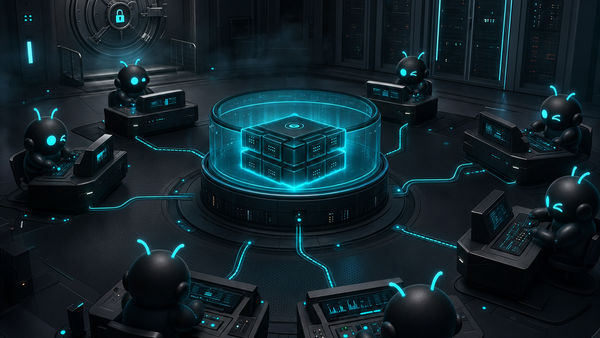
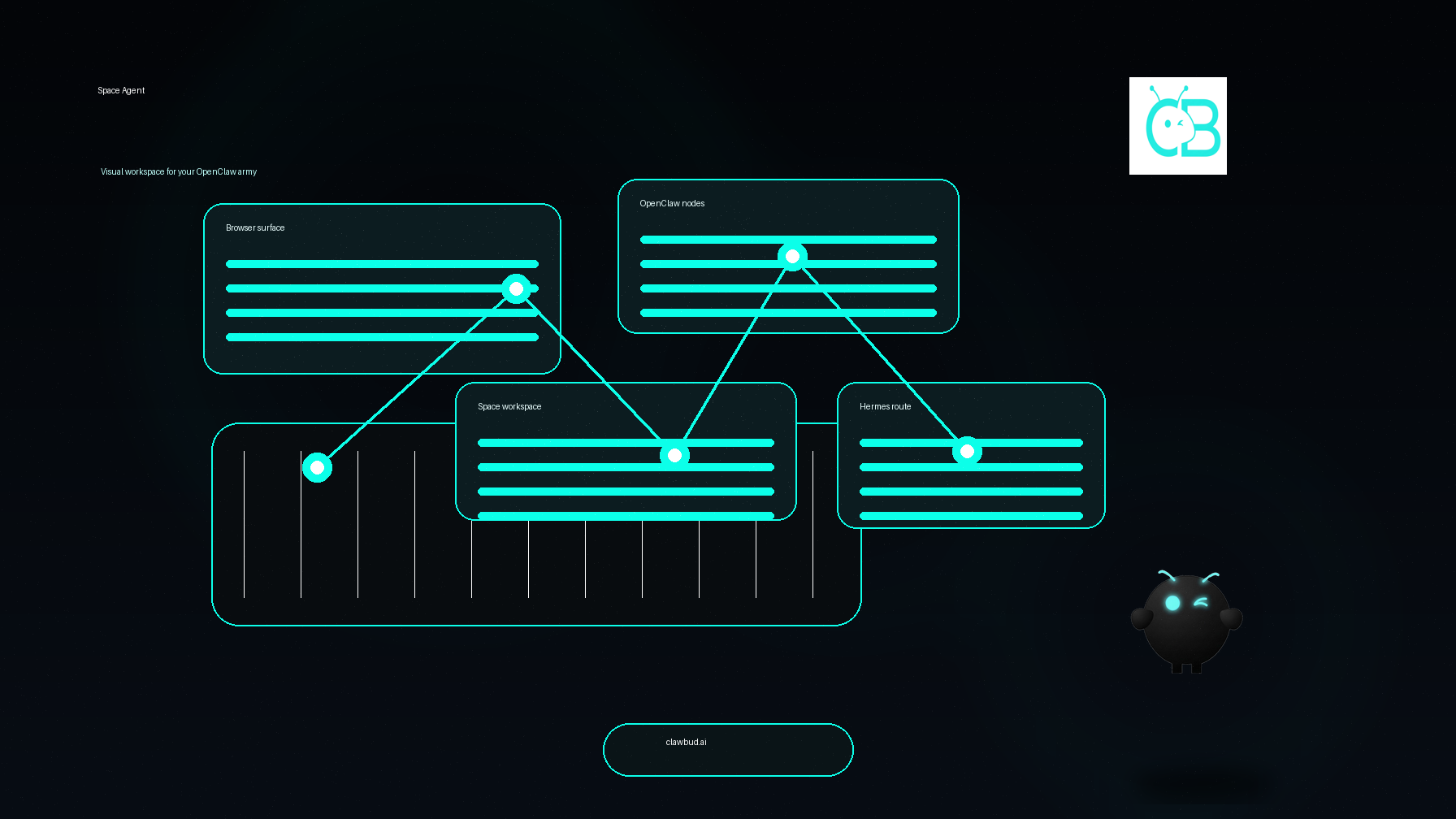
Space Agent fits that model because it gives agents a more visual workspace for operating inside the ClawBud Agentic OS. Instead of treating an agent as a text reply machine, Space Agent moves the work closer to an actual command environment: browser, workspace, task context, and agent coordination all living on the customer’s own dedicated computer.
This guide explains what Space Agent does, who it is for, where it sits inside the agent army, what tier it belongs to, what to watch out for, and how to use it without confusing it with code agents like Claude Code, Codex, Gemini CLI, or OpenCode.
Table of Contents
- What Space Agent is
- Why Space Agent exists
- How it fits inside your ClawBud agent army
- Space Agent versus code agents and CLIs
- Tier and availability
- Three practical use cases
- Risks, boundaries, and approval rules
- FAQ
What Space Agent is
Space Agent is a ClawBud agent surface for visual, workspace-style autonomous work.
That wording matters. Space Agent is not another chat tab. It is not a replacement for OpenClaw. It is not a coding CLI. It is part of the wider ClawBud Agentic OS, where OpenClaw acts as a core runtime, Hermes helps coordinate agent work, and the customer’s agent army runs on its own private cloud computer.
In practical terms, Space Agent is the place you use when the work needs a richer operating space than a prompt box. It is built for tasks where the agent may need to reason across context, use browser-like surfaces, move between tools, and keep a visible working environment instead of disappearing behind a reply.
The current ClawBud wiki lists Space Agent as GA, available to customers. The May changelog also notes the Space Agent release to all users, including native browser display work and a Codex bridge fix. That makes it more than a roadmap idea. It is part of the current platform stack.
The simple map:
- OpenClaw: core autonomous agent runtime.
- Hermes: multi-agent orchestration and fleet coordination.
- Space Agent: visual workspace-style agent work.
- Code agents and CLIs: software development and terminal-first coding tasks.
- Business Room and CRM: business command layer, customer work, deals, tasks, and specialists.
- Real browser: lets agents operate in real web environments.
- Per-agent firewall: keeps agent boundaries clearer and safer.
Space Agent belongs in the middle of this system. It gives the army another place to operate.
Why Space Agent exists
There is a limit to what a chat interface can explain.
If you ask an agent to research a competitor, compare pricing pages, check product copy, gather examples, update a plan, and prepare a recommendation, the final answer is only one part of the job. You also care about the workspace behind it. What did the agent look at? What changed? What is still open? Which part needs your approval?
That is where the Space Agent idea becomes useful. It pushes agent work toward a visible operating environment instead of a hidden response pipeline.
ClawBud’s larger bet is that autonomous agents need a home. Not a rented text box. Not a shared container. A real dedicated computer with OpenClaw, Hermes, browser access, memory, channels, skills, MCP, wallet rails where enabled, support, and firewall boundaries. Space Agent is one more surface inside that home.
This is also why ClawBud keeps separating autonomous agents from code agents. A code agent can be excellent at software work and still be the wrong tool for sales operations, research workflows, lead review, admin work, browsing, CRM cleanup, or recurring business tasks. Space Agent is for that broader operating layer.
How it fits inside your ClawBud agent army
ClawBud’s positioning is simple: Your own cloud-native agent army.
That army can include OpenClaw, Hermes, NemoClaw, Automaton, DeerFlow 2.0, Goose, Space Agent, Claude Code, Codex, Gemini CLI, OpenCode, CRM specialists, and future vertical agents. They do not all do the same job.
Space Agent’s role is to give the army a spatial work surface. It helps when a task feels less like “answer this” and more like “work through this environment.”
A healthy agent army usually has several modes:
- Chat and command: quick instructions, summaries, approvals, and questions.
- OpenClaw autonomous work: ongoing tasks, tool use, channel responses, and workflow execution.
- Hermes orchestration: missions that need multiple workers or routed steps.
- Space Agent: visual workspace tasks and browser-adjacent work.
- Code agents: repo work, code changes, debugging, tests, and CLI flows.
The mistake is treating every agent as one universal worker. That sounds tidy, but it breaks fast.
A sales agent does not need to behave like Codex. A coding CLI does not need to own your CRM. A browser-capable research worker should not be forced into a plain chat loop. Space Agent exists because the work deserves a better container.
Space Agent versus code agents and CLIs
This distinction is worth making bluntly.
Claude Code, Codex, Gemini CLI, and OpenCode are code agents or coding CLIs. They are strongest when the work lives in files, repositories, terminal commands, tests, diffs, and engineering workflows.
OpenClaw, Hermes, Space Agent, Automaton, NemoClaw, Goose, and DeerFlow are autonomous agent layers. They are better framed as workers inside an operating system for agentic work. Some can touch code. Some can browse. Some can coordinate. Some can run workflows. The point is that their job is broader than editing a repo.
Space Agent is not trying to beat Codex at code. That would be the wrong category. Space Agent is for visual, browser-connected, workspace-style operations inside the ClawBud Agentic OS.
Use a code agent when the job is changing a function, reviewing a pull request, debugging a failing test, installing a package, explaining a stack trace, or refactoring a repo.
Use Space Agent when the job is working through web research, comparing pages or dashboards, keeping task context visible, operating with a real browser surface, preparing a business workflow for review, or coordinating with other agents inside the agent army.
That separation keeps the system sane.
Tier and availability
According to the current ClawBud wiki, Space Agent is GA and available to all customers.
That makes it different from some gated surfaces. NemoClaw, Goose, and DeerFlow 2.0 are Pro or higher surfaces. Memory Wiki is still beta for selected users. Agent Wallet plus x402 is gated. CRM v1.0 is beta. Space Agent is part of the shipped customer feature set.
The current ClawBud plan structure is BYOK at $20 per month, Starter at $39 per month, Pro at $79 per month, and Business at $169 per month. BYOK and Starter include a full dedicated computer with Telegram. Pro adds more computer power, WhatsApp, Discord, all skills, and Pro-gated agents. Business adds the highest computer tier, all channels, priority support, and custom integrations.
For Space Agent specifically, the important point is not just the plan table. It is the architecture. Even at the starting tiers, ClawBud is not placing you into shared hosting. You get your own full computer for the agent army. That is what makes a workspace-style agent practical.
Three practical use cases
1. Competitive research without losing the trail
Space Agent is useful for competitive research because the browser path matters.
A normal chatbot can summarize competitors from memory or search snippets. That is risky. Pricing pages change. Product claims change. Security claims change. If you are making a positioning decision, you want the agent working from live pages and leaving a clean trail of what it saw.
Example mission:
Compare four agent platforms. Track whether each offers a dedicated computer, OpenClaw support, browser access, firewall boundaries, managed setup, and customer support. Return a short table and a positioning recommendation for ClawBud.
Why Space Agent fits:
- It can operate through a browser-style flow.
- It keeps the work tied to real pages.
- It can hand off findings to OpenClaw, Hermes, or a marketing workflow.
- It supports review before public claims are made.
The boundary is simple: do not let the agent publish, message competitors, or edit live pages without explicit approval.
2. Operations review across messy web tools
Most businesses run on web tools that do not share one clean API. CRM, inbox, analytics, docs, ticketing, forms, payment pages, dashboards. The work is spread everywhere.
Space Agent is useful when the agent needs to inspect several web surfaces and prepare an operational answer.
Example mission:
Review today’s support signals across the approved dashboards. Identify urgent customer issues, summarize patterns, and propose the top fixes. Do not contact customers. Do not change settings.
Why Space Agent fits:
- It can work in a visual environment.
- It supports browser-adjacent review.
- It gives a better audit trail than a pure chat answer.
- It can escalate tasks into the wider agent army.
This is where ClawBud’s full dedicated computer matters. The agent is not just borrowing a prompt window. It has an operating environment built for long-running work.
3. Content and launch preparation with human approval
Space Agent can also help with launch work.
Imagine preparing a feature launch. The agent needs to inspect product notes, check existing posts, gather screenshots or page references, compare old messaging, and prepare a draft. A code agent is not the right worker. A plain chatbot will lose context fast.
Example mission:
Prepare a Space Agent launch brief. Review the latest wiki notes, current pricing, recent blog posts, and product positioning. Draft a launch checklist, social angles, and FAQ. Do not publish.
Why Space Agent fits:
- The work mixes research, browsing, memory, and planning.
- It benefits from a visible workspace.
- It can coordinate with OpenClaw and Hermes.
- It keeps the human in the approval loop.
That last point matters. Good agent systems do not remove judgment. They move repetitive work to the agent army while keeping risky actions behind human approval.
Risks, boundaries, and approval rules
Space Agent gives an autonomous worker a richer environment. That is powerful, and it needs boundaries.
The first rule: autonomy is not the same as permission.
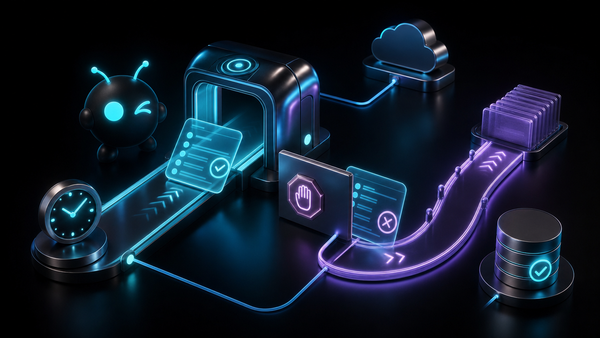
An agent can research, draft, compare, summarize, and prepare. It should not make irreversible external changes unless the user explicitly approved the action. That includes publishing content, sending messages, changing billing settings, modifying production systems, deleting files, or triggering customer-facing actions.
The second rule: browser access is not trust by itself.
A real browser helps the agent work with live information. It does not guarantee that every page is correct, current, or safe. The agent still needs source checks, clear instructions, and approval gates.
The third rule: use the right worker for the job.
If the task is code, use Claude Code, Codex, Gemini CLI, or OpenCode. If the task is multi-agent coordination, use Hermes or Agent Orchestra. If the task is visual workspace work, use Space Agent. If the task is customer data or sales workflow, route it through CRM and the right specialist context.
ClawBud’s per-agent firewall story matters here. The goal is not to let one agent roam everywhere. The goal is to give each worker a clear boundary, then coordinate them through the Agentic OS.
Setup checklist
Before giving Space Agent a serious task, use this checklist:
- Confirm the goal is visual, browser-connected, or workspace-style work.
- Decide what sources the agent may use.
- State what it must not change.
- Add an approval line for external actions.
- Choose the output format.
- Keep code-heavy tasks with code agents and CLIs.
- Keep customer-facing actions behind human review.
- Save useful findings into Memory Wiki when that feature is enabled for your account.
- Use Hermes or Agent Orchestra when multiple workers need to coordinate.
A strong first Space Agent mission should be narrow. Let it build trust on a contained workflow before you give it broader operational responsibility.
FAQ
Is Space Agent the same thing as OpenClaw?
No. OpenClaw is the core autonomous runtime inside ClawBud. Space Agent is a visual workspace-style agent surface inside the wider ClawBud Agentic OS. They work together, but they are not the same layer.
Is Space Agent a chatbot?
No. ClawBud is not a chatbot, and Space Agent is not meant to be another reply box. It is part of a cloud-native agent army running on your own full dedicated computer.
Does Space Agent replace Claude Code or Codex?
No. Claude Code, Codex, Gemini CLI, and OpenCode are code agents or coding CLIs. Use them for repo work, terminal tasks, debugging, and software changes. Use Space Agent for visual workspace and browser-adjacent operations.
What tier includes Space Agent?
The current ClawBud wiki lists Space Agent as GA for all customers. Some other agents and surfaces are gated, but Space Agent is part of the shipped customer feature set.
Why does Space Agent need a full dedicated computer?
A workspace-style agent needs a real operating environment: browser access, tools, files, context, and boundaries. Shared hosting is the wrong model for that. ClawBud gives each customer a full dedicated computer for the OpenClaw-powered agent army.
Can Space Agent use a real browser?
Space Agent is tied to ClawBud’s broader real browser and workspace direction. The May platform notes mention native browser display work for Space Agent. The practical result is that Space Agent belongs in workflows where browser-visible work matters.
Is Space Agent safe for external actions?
Researching, drafting, and preparing work are normal. Publishing, messaging, changing settings, spending money, deleting data, or touching production systems should require explicit approval.
How does Space Agent fit with Hermes?
Hermes is the orchestration pillar. Space Agent can be one worker or surface inside a larger mission. If the task needs several agents, Hermes or Agent Orchestra can coordinate the broader flow.
Start with ClawBud
If you want an agent that only answers questions, any chatbot can do that.
ClawBud is for the next step: your own cloud-native agent army, powered by OpenClaw, running on a full dedicated computer, with real browser access, per-agent firewall boundaries, Hermes orchestration, code agents, business workflows, and premium support ready in clicks.
Start with ClawBud at clawbud.ai.