Space Agent: Your OpenClaw Agent With Its Own Browser
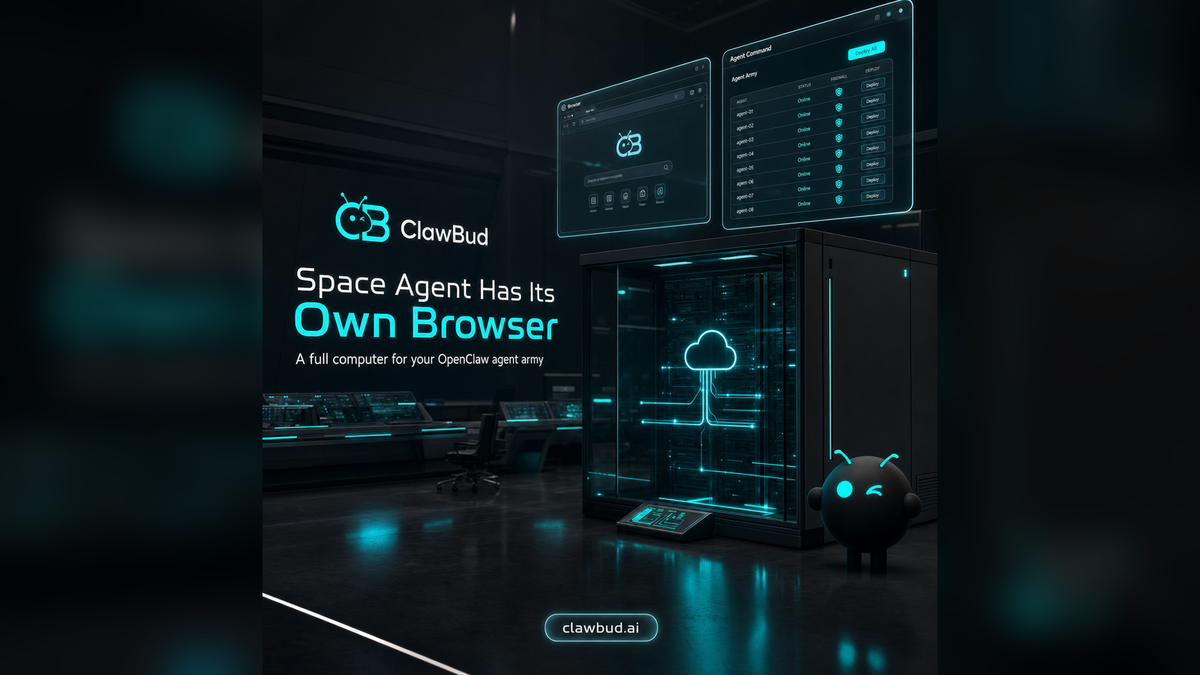
Not a chatbot. Not a shared container. A full computer, a real army of agents, and a per-agent firewall, all yours, deployed in one click.
That explains why Space Agent matters.
Most people still picture an agent as a chat box with better memory. You type. It answers. Maybe it calls a tool. Useful, sure. But it is still mostly stuck inside conversation.
A Space Agent is different. It is an OpenClaw agent that can work inside a real browser, on its own dedicated computer, with room to operate like a worker instead of a widget. It can open dashboards, inspect pages, use apps, move between tools, remember context, and execute tasks.
That shift sounds small until you watch it happen. The moment an agent gets its own browser, the job changes from answering to doing.
What Is a Space Agent?
A Space Agent is an autonomous OpenClaw agent with its own working environment. In ClawBud, that environment is not a shared sandbox squeezed next to other users. It is your own dedicated computer in the cloud, managed for you, ready in one click, and built for running an agent army.
Think of it as a private digital workstation for autonomous work.
The agent can use a dedicated browser, connect to business tools, hold memory, run skills, and operate behind a dedicated firewall. You do not need to set up servers, wire security rules, install packages, or babysit a terminal. ClawBud handles the boring infrastructure so your OpenClaw agent can focus on the work.
That matters because real work rarely happens in one API. A chat-only tool can describe the steps. A Space Agent can actually move through them.
Why the Browser Changes Everything
Browsers are where modern work lives.
Your SaaS apps live there. Your admin panels live there. Your analytics tools live there. Your documentation, billing pages, inboxes, forms, dashboards, and lead sources live there too.
When an OpenClaw agent has a real browser, it can interact with the same surface your team already uses. It can inspect a page visually, click through flows, compare states, grab context from pages that do not have a clean API, and handle work that would otherwise require a human tab-hopping for twenty minutes.
APIs are still better when they exist and are stable. But the browser is the fallback that makes an agent practical in the messy real world. In ClawBud, Watch Agent lets you see what the agent is doing in real time and step in when needed. Autonomous does not mean blind.
Dedicated Computer Beats Shared Container
Shared containers are fine for demos. They are not the right foundation for a serious agent army.
When your agent runs in a cramped shared environment, you inherit limits you did not choose. Browser sessions are more fragile. Long-running work is harder. Security boundaries get fuzzier. Multiple agents competing for the same little box becomes a mess fast.
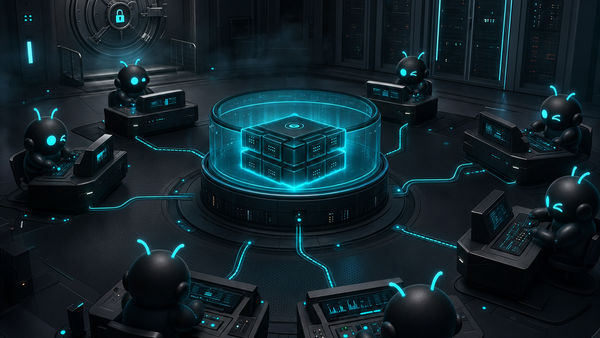
ClawBud takes the opposite approach. Your OpenClaw agent runs on a dedicated cloud computer, with resources and boundaries designed around your work. That dedicated computer can become the home base for one autonomous worker or a growing agent army: OpenClaw, Hermes, Codex, Claude Code, Space Agent, automation agents, and more.
This is the product direction that matters: not one assistant in a chat window, but a cloud-native agent army with its own machine to work from.
The Per-Agent Firewall Is Not Cosmetic
Autonomous agents need boundaries.
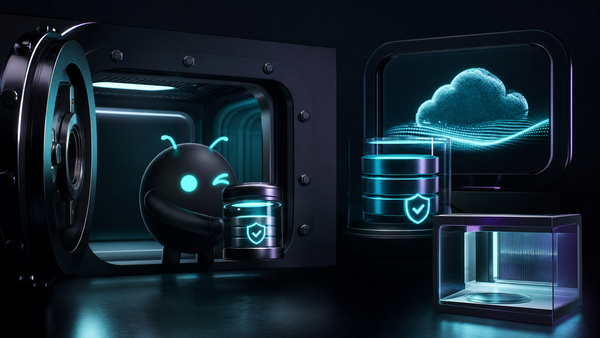
A dedicated firewall per agent is one of the most important pieces of the ClawBud model. It means each OpenClaw agent can be protected with its own network rules instead of being treated as just another process in a shared environment.
An autonomous agent with a browser, tools, memory, and connected accounts has real reach. It can access services, move data, and execute steps inside workflows. That is powerful, and power needs edges.
ClawBud uses per-agent firewall boundaries so agents are not just productive, they are contained. It is the difference between giving someone a desk in your office and giving them a badge that opens every door in the building.
Code Agents and CLIs Are Not the Same Thing as Autonomous Agents
This is where people mix things up.
Codex, Claude Code, and other coding CLIs are excellent at software work. They can inspect code, edit files, run tests, reason through bugs, and help ship faster. They are code agents, and they belong in the agent army.
But a code CLI is not the whole army.
An autonomous OpenClaw agent can coordinate work outside the repo. It can use a browser, work across business tools, remember operational context, answer messages, monitor dashboards, and hand off tasks. It can call a coding agent when the task becomes technical, but it is not limited to code.
That is the architecture ClawBud is built around. Use OpenClaw for broad autonomous work. Use Codex or Claude Code for deep code execution. Use Space Agent for browser-heavy workflows. If you want the deeper comparison, read OpenClaw vs Hermes vs Codex. A serious agent setup is a working system.
What Space Agent Is Best For
Space Agent is strongest when the task touches real web products, not just text.
Good fits include dashboard checks, competitor research, SaaS tools without clean APIs, form review with human oversight, screenshots, browser preview checks, and workflows that move between email, CRM, docs, and internal tools.
The pattern is simple: if a human would normally open five tabs to complete the work, a Space Agent is probably useful.
How ClawBud Makes It Practical
You can self-host OpenClaw if you want to own every piece of the setup. For some technical teams, that is the right call.
Most people do not want that job.
ClawBud is for the person or company that wants the outcome: an OpenClaw agent or agent army running on a dedicated cloud computer, with a browser, memory, tools, a dedicated firewall, and support, without turning setup into a weekend infrastructure project.
You choose a plan, bring your own keys if needed, and launch. The ClawBud pricing page shows the path from BYOK to managed plans. If you are comparing options, the key question is not “Can this answer prompts?” The question is “Can this run real work safely, visibly, and repeatedly?”
That is where the dedicated computer model wins.
Start With One Space Agent
The best way to adopt autonomous agents is not to automate the whole company on day one. That is how teams create expensive chaos.
Start with one workflow that already hurts.
Pick something browser-heavy, repetitive, and valuable enough to matter. Give the agent a clear job. Watch it. Tighten the instructions. Then decide whether the next worker should be another Space Agent, a coding CLI, an automation agent, or a more general OpenClaw operator.
ClawBud gives that worker a real place to live.
Start with ClawBud and launch your own cloud-native agent army in one click.
FAQs
Is Space Agent a chatbot?
No. A chatbot mainly replies inside a conversation. A Space Agent is an OpenClaw agent with its own browser and working environment, so it can operate across web tools and workflows.
Does ClawBud run OpenClaw?
Yes. ClawBud is built around managed OpenClaw agents and expands that foundation into your own cloud-native agent army on a dedicated computer.
Why does an agent need its own browser?
Because many real workflows happen inside web apps. A browser lets the agent inspect pages, use dashboards, collect evidence, and work with tools that do not have clean APIs.
What is the difference between a code agent and an autonomous agent?
A code agent or CLI is built mainly for software work: editing files, running tests, and helping ship code. An autonomous OpenClaw agent can coordinate broader work across browsers, tools, messages, memory, and other agents.
Why is a dedicated firewall important?
Autonomous agents can reach real services and data. A dedicated firewall gives each agent clearer network boundaries, which makes the setup safer and easier to reason about.
Do I need technical skills to start?
No. ClawBud is designed for one-click setup, with managed infrastructure and support. You can start with one OpenClaw agent and grow into a larger agent army over time.