OpenClaw Security: How to Run an AI Agent Without Exposing Your Data
AI agents are no longer a novelty. Businesses are running them for customer support, sales automation, research, code generation, and internal operations. The problem is that most people deploying AI agents have never stopped to ask a simple question: where exactly is my data going?
The answer matters more than most people realize.
The Security Problem with Shared AI Platforms
When you run an AI agent on a shared cloud platform, your requests, your data, and your business logic all pass through shared infrastructure. That means:
- Your prompts travel through multi-tenant servers
- Your API keys and credentials are stored in shared databases
- Your agent's memory and context may be cached on infrastructure used by thousands of other tenants
- You have no visibility into what logs are being kept or who can access them
This is not a theoretical concern. Multi-tenant platforms are a well-documented attack surface. A misconfigured isolation layer, a logging bug, or a compromised support account can expose data from dozens of customers at once. Shared infrastructure means shared risk.
For consumer apps, this is an acceptable tradeoff. For businesses running AI agents with access to CRMs, internal databases, financial records, or customer data, it is not.
What "Private AI Agent" Actually Means
The term "private AI agent" gets thrown around a lot. Here is what it actually requires:
Dedicated compute. Your agent runs on hardware that no other tenant shares. There is no hypervisor-level neighbor who could exploit a side-channel vulnerability. Your CPU cycles, memory, and disk belong to you.
Isolated network. Your agent's network traffic is not mixed with anyone else's. Inbound and outbound connections are controlled at the infrastructure level, not just at the application layer.
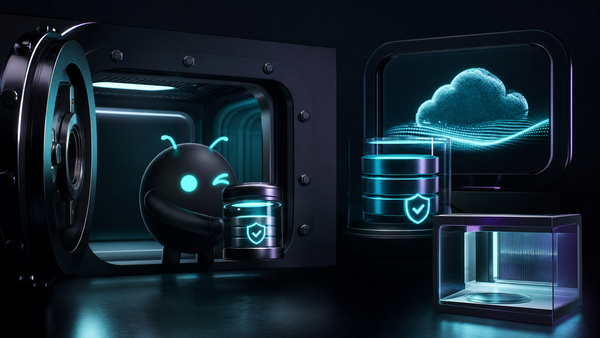
Private key storage. Your API keys, credentials, and secrets are stored in an environment only your agent can access. They do not live in a shared secrets manager alongside other customers' keys.
Full audit capability. You can inspect every log, every network connection, every process running on your agent's server. No black boxes.
Without all four of these, you do not have a private AI agent. You have a shared platform with a privacy-themed marketing page.
OpenClaw and the Infrastructure Question
OpenClaw is the AI agent framework that ClawBud is built on. It is a powerful, extensible system that can connect to web browsers, terminals, APIs, databases, and external services. That power is exactly why the security question matters so much.
An OpenClaw agent can:
- Browse the web on your behalf
- Execute shell commands
- Read and write files
- Call external APIs with your credentials
- Interact with business systems
Now imagine that agent running on shared infrastructure. Every one of those capabilities becomes a potential data exposure vector. The agent that reads your internal documentation is running on the same physical server as a stranger's agent. The environment that holds your database credentials is managed by a platform you do not control.
Secure OpenClaw deployment requires dedicated infrastructure. There is no shortcut.
UFW: The Firewall That Actually Protects Your Agent
Most people outside of server administration have not heard of UFW. Here is what it is and why it matters.
UFW stands for Uncomplicated Firewall. It is a front-end for Linux's built-in netfilter firewall system. In practical terms, it controls which network connections are allowed to reach a server and which connections that server is allowed to make.
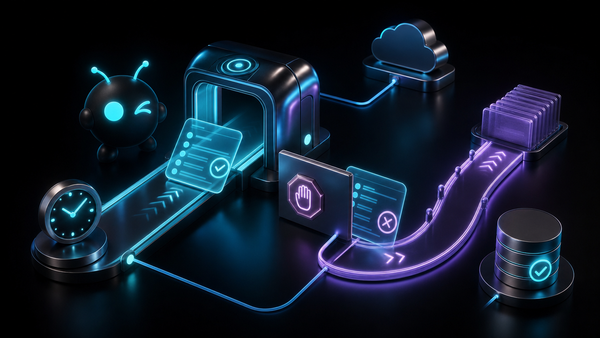
Think of it like a security guard at the door of a building. Without a firewall, anyone can walk in and out. With a properly configured firewall, only authorized traffic gets through. Everything else is blocked.
For an AI agent, this matters enormously. An OpenClaw agent without a firewall can:
- Accept inbound connections from any IP address
- Make outbound requests to any destination
- Expose internal services to the public internet
- Be used as a pivot point if another part of your network is compromised
A properly configured UFW firewall for an OpenClaw agent should:
- Block all inbound traffic except what is explicitly needed
- Restrict outbound traffic to known, authorized endpoints
- Log all connection attempts for audit purposes
- Deny all traffic by default, allow only by exception
This is standard security practice for any server. The surprising thing is how few AI agent platforms actually do it.
Why Most Platforms Skip the Firewall
Setting up a dedicated firewall per agent is not difficult from a technical standpoint. UFW configuration is straightforward. The challenge is operational.
When you run thousands of agents on shared infrastructure, per-agent firewall rules become a management problem. You need to provision rules for each agent independently, update them when agent capabilities change, monitor them continuously, and tear them down cleanly when an agent is decommissioned.
On shared infrastructure, this is nearly impossible to do correctly. Instead, platforms apply broad network policies at the cluster level. A single set of firewall rules covers all tenants. If your agent needs to make an outbound request to an external API, the platform opens that port for everyone.
This is the security tradeoff that shared platforms make. Not because they are careless, but because the architecture does not support per-agent isolation.
The only way to give each agent its own firewall is to give each agent its own server.
ClawBud's Architecture: One Agent, One Server, One Firewall
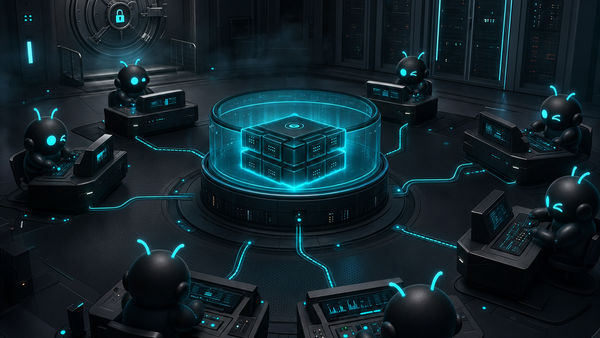
ClawBud was built around a single architectural principle: every agent gets dedicated infrastructure.
When you create an agent on ClawBud, the platform provisions a dedicated virtual machine for that agent. Not a container. Not a namespace. A full virtual machine with dedicated compute, dedicated memory, and dedicated network interfaces.
On top of that dedicated server, ClawBud configures a UFW firewall specifically for your agent. The rules are based on what your agent actually needs to do. Inbound connections are locked down. Outbound traffic is restricted to authorized endpoints. Default deny is applied at the network level.
This is not a setting you can turn on with a toggle. It is the foundational architecture of how ClawBud works. Every agent, by default, runs with:
- A dedicated server with no other tenants
- UFW configured with agent-specific rules
- Isolated network interfaces
- Private credential storage
- Full logging accessible only to the agent owner
ClawBud is the only OpenClaw platform that provides per-agent dedicated firewall protection. No other managed OpenClaw provider does this. It is an industry first.
Shared Cloud AI vs. ClawBud: A Direct Comparison
Here is how ClawBud compares to typical shared cloud AI platforms on the dimensions that matter for security:
Server isolation
- Shared platforms: Multi-tenant containers or VMs. Your agent shares hardware with other customers.
- ClawBud: Dedicated virtual machine per agent. No shared compute.
Firewall protection
- Shared platforms: Cluster-level network policies. All tenants share the same rules.
- ClawBud: UFW firewall configured per agent. Your rules, your agent only.
Credential storage
- Shared platforms: Shared secrets manager. Your API keys are stored alongside thousands of other customers' keys.
- ClawBud: Isolated environment per agent. Your credentials are only accessible to your agent.
Network traffic visibility
- Shared platforms: You see application logs, maybe. You do not see network-level traffic.
- ClawBud: Full access to UFW logs and network traffic for your agent's server.
Audit capability
- Shared platforms: Limited. You depend on the platform to tell you what happened.
- ClawBud: Complete. Your server, your logs, your audit trail.
Data residency
- Shared platforms: Often unclear. Your data may traverse multiple regions and providers.
- ClawBud: Defined. You know exactly where your server is and where your data lives.
AI Agent Data Privacy: The Regulatory Angle
Data privacy is not just a security concern. It is increasingly a legal one.
Businesses in the EU operating under GDPR, companies in California subject to CCPA, healthcare organizations under HIPAA, and financial services firms under various financial privacy regulations all face requirements around where data is processed, who can access it, and how it is protected.
Running an AI agent on shared infrastructure makes compliance harder. You cannot easily demonstrate that your data was isolated from other tenants. You cannot prove that your credentials were never accessible to another customer's workload. You cannot show an auditor network-level evidence that your agent only communicated with authorized systems.
With a dedicated server and per-agent firewall, you can. The infrastructure gives you the audit trail, the isolation evidence, and the network control records that compliance frameworks require.
For regulated industries, the choice between shared and dedicated is not just about security preference. It is about whether you can legally deploy an AI agent at all.
Getting Started with Secure OpenClaw on ClawBud
Setting up a secure OpenClaw agent on ClawBud does not require server administration expertise. The platform handles the infrastructure provisioning and firewall configuration automatically.
What you get out of the box:
- A dedicated virtual machine in your chosen region
- OpenClaw pre-installed and configured
- UFW firewall active with secure default rules
- Isolated network environment
- Full SSH access if you want to inspect or customize your server
- Logging enabled and accessible
For teams that need additional hardening, ClawBud's dedicated server gives you direct access to configure additional security controls: custom firewall rules, intrusion detection, additional authentication layers, or network monitoring tools. Because it is your server, you have root access. You are not waiting for a platform team to add a feature.
The Standard Should Be Higher
The AI agent industry has a security problem that most vendors do not want to talk about. Shared infrastructure is cheaper to operate, easier to scale, and simpler to sell. But it is not the right answer for businesses that take data security seriously.
The fact that per-agent dedicated firewalls are considered an "industry first" in 2026 is telling. It should be the baseline. Every business running an AI agent with access to sensitive systems deserves dedicated infrastructure and proper network isolation.
ClawBud exists because that standard needs to exist. One agent. One server. One firewall. No compromises.
Your data. Your server. Your firewall. Only on ClawBud. clawbud.ai