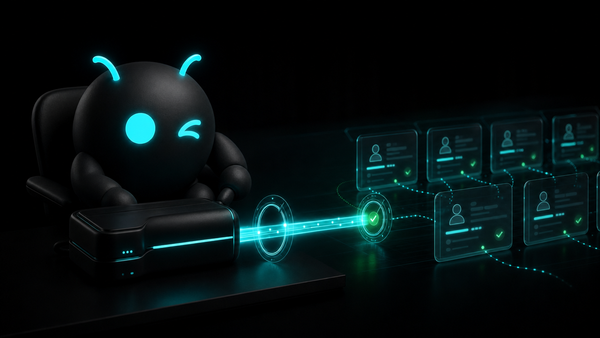
What Is OpenClaw? The Complete Guide to the AI Agent Framework
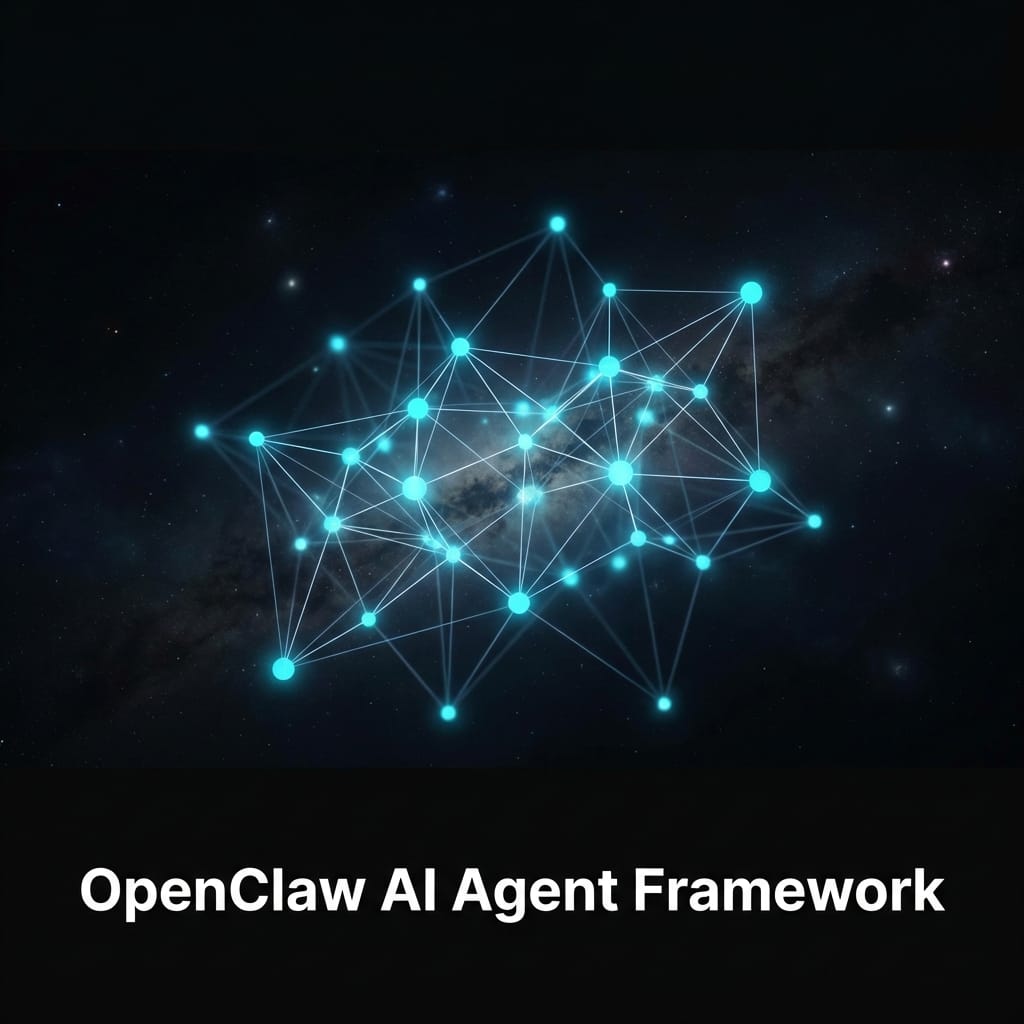
Autonomous AI agents are no longer a research concept. They are running in production, executing real tasks, managing workflows, and operating with a level of independence that would have seemed impossible just two years ago. At the center of this shift is OpenClaw, an open-source AI agent framework built for teams that need more than a chatbot.
This guide covers everything you need to know about OpenClaw: what it is, how it works, who it is built for, and the fastest way to get started.
What Is OpenClaw?
OpenClaw is an open-source AI agent framework that gives you a complete runtime environment for deploying, managing, and extending autonomous AI agents. Think of it as the operating system for your AI workers.
Unlike standalone LLM wrappers or simple chat interfaces, OpenClaw is designed around the concept of long-running, goal-oriented agents. These agents can use tools, remember context across sessions, execute multi-step workflows, and adapt their behavior based on what they learn over time.
The framework is built to be modular. You bring the model (OpenAI, Anthropic, Google, or any compatible provider), and OpenClaw supplies the scaffolding: memory, tool use, skill management, multi-agent coordination, and session handling.
OpenClaw is especially popular with developers and teams that want an agent framework they can actually control. No vendor lock-in. No black-box hosted agent that you cannot inspect or customize. Full visibility into what your agent is doing and why.
How OpenClaw Works
OpenClaw is organized around four core concepts: agents, skills, tools, and memory. Understanding how these fit together is the key to understanding what makes the framework powerful.
Agents
An agent in OpenClaw is a persistent, configurable AI worker. Each agent has its own identity, behavior rules, and operational context. You can run a single agent or coordinate a team of specialized agents working on different parts of a larger task.
Agents are not stateless request-response systems. They maintain continuity across sessions, remember what they have done before, and can be given long-running objectives that span hours, days, or longer.
Skills
Skills are the most distinctive concept in OpenClaw. A skill is a packaged set of instructions that teaches an agent how to handle a specific type of task. Skills are portable, version-controlled, and shareable.
Need your agent to write SEO blog posts? Install the SEO writer skill. Need it to manage a GitHub repo? Install the GitHub skill. Need it to monitor weather, summarize URLs, or publish to social media? There are skills for all of that.
Skills live in a dedicated workspace directory and follow a standard structure: a SKILL.md instruction file plus any supporting scripts, reference documents, or configuration files. This makes them easy to audit, customize, and share with others.
The skills system is what separates OpenClaw agents from generic LLM setups. Instead of engineering new prompts every time you want new behavior, you install a skill once and it works reliably across sessions.
Tools
Tools give agents the ability to take action in the real world. OpenClaw agents can use a rich set of built-in tools out of the box: reading and writing files, executing shell commands, browsing the web, taking screenshots, sending messages, calling APIs, and more.
The tool layer is designed for safety as well as capability. You control exactly which tools are available to each agent, and you can configure approval workflows so that sensitive actions require explicit confirmation before they run.
This is not the kind of agent that goes rogue and starts doing things you did not intend. OpenClaw gives you granular control over what your agents are allowed to do.
Memory
One of the biggest limitations of simple LLM deployments is that they forget everything between sessions. OpenClaw solves this with a persistent memory system that survives across restarts and sessions.
Agents can read and write files, maintain structured logs, build up knowledge over time, and reference past decisions when handling new tasks. This enables genuinely long-running workflows where the agent accumulates expertise and context rather than starting from scratch every time.
The memory model is transparent by design. You can read your agent's memory files directly, edit them, and see exactly what your agent knows. There are no hidden embeddings or black-box retrieval systems unless you choose to add them.
Multi-Agent Coordination
OpenClaw supports multi-agent architectures where a primary agent can spawn sub-agents to handle specialized tasks in parallel. This is how you scale from a single AI worker to an agent team.
A typical pattern: a primary agent receives a complex objective, breaks it down into sub-tasks, spawns specialized sub-agents to execute each one, and then synthesizes the results. Each sub-agent runs with its own skill set, tool access, and session context.
This architecture is what makes OpenClaw suitable for serious production workloads. You are not limited to what a single model context window can handle. You can build hierarchical agent teams that tackle problems too large or complex for any single session.
Who Is OpenClaw For?
OpenClaw is built for developers, technical teams, and organizations that want real AI agent infrastructure rather than a demo.
Developers who want to build custom agents without fighting against opinionated frameworks. OpenClaw gives you a solid foundation without forcing you into a specific workflow pattern.
Startups and scaleups that need to automate operations: content pipelines, customer research, competitive monitoring, lead management, or internal knowledge management. OpenClaw agents can handle all of these with the right skills installed.
Enterprises that require on-premises or private-cloud deployment. Because OpenClaw is open source, you can run it entirely on your own infrastructure, behind your own firewall, with full data sovereignty.
Teams building agent products. If you are building a product that includes AI agent functionality, OpenClaw gives you a production-ready runtime so you can focus on your product logic rather than re-engineering agent infrastructure.
The OpenClaw Ecosystem
OpenClaw has developed a growing ecosystem around skills and integrations.
The ClawHub package registry lets you search, install, and publish skills the same way npm works for Node packages. There are already hundreds of skills available covering content creation, SEO, social media, web research, security scanning, video generation, and more.
The framework integrates with all major LLM providers through a unified model abstraction layer. You can switch between providers or run different agents on different models without changing your skill code.
OpenClaw also includes a built-in canvas and browser control system, which means your agents can interact with web pages, fill forms, extract data, and automate browser-based workflows without any additional setup.
Getting Started with OpenClaw
Setting up OpenClaw from scratch requires a few steps: installing the runtime, configuring your model provider credentials, setting up your workspace, and deploying your first agent. For developers comfortable with the command line, this is manageable.
The real challenge is everything that comes after initial setup: securing your agent environment, configuring network isolation, managing API key rotation, keeping the runtime updated, and scaling to multiple agents without infrastructure headaches.
This is where most teams hit friction. OpenClaw is powerful, but running it well in production takes real DevOps effort.
Why ClawBud Is the Smarter Way to Run OpenClaw
ClawBud is the managed hosting platform built specifically for OpenClaw. It takes the framework and wraps it in enterprise-grade infrastructure so you get all the power of OpenClaw without any of the operational overhead.
Here is what you get with ClawBud that you do not get with a self-hosted setup:
Private server. Every ClawBud account gets a dedicated server, not a shared container. Your agents run in isolation from everyone else's.
Dedicated firewall. ClawBud includes a per-agent firewall, giving you precise network control over what your agents can access. This is a security feature that most teams would need to build themselves from scratch on a self-hosted OpenClaw deployment.
1-click setup. No server provisioning, no runtime installation, no configuration debugging. You go from account creation to a running agent in minutes.
Automatic updates. ClawBud keeps your OpenClaw runtime up to date without you having to manage it.
Full skill access. All ClawHub skills work out of the box on ClawBud. Install and run any skill without worrying about dependency conflicts or environment issues.
Session continuity. ClawBud manages agent persistence and memory storage reliably, so your long-running agents stay healthy across sessions.
If you are evaluating OpenClaw for a serious use case, starting with ClawBud is the sensible choice. You get a production environment immediately rather than spending days (or weeks) configuring infrastructure that is not your core business.
OpenClaw vs. Other Agent Frameworks
There are other agent frameworks worth knowing about: LangChain, AutoGen, CrewAI, and a growing list of hosted agent products. Here is how OpenClaw compares.
LangChain is primarily a library for building LLM applications. It has agent capabilities, but it is not a complete agent runtime. You still need to build the infrastructure around it.
AutoGen (Microsoft) focuses on multi-agent conversation patterns. It is powerful for research and experimentation but requires significant engineering to productionize.
CrewAI takes a role-based crew metaphor for multi-agent systems. It is approachable but less flexible than OpenClaw for custom tool and memory configurations.
OpenClaw sits in a different category: a complete, production-ready agent runtime with a skills ecosystem, tool layer, memory system, and multi-agent coordination built in. It is more opinionated than LangChain but more flexible than most hosted alternatives.
For teams that need something that actually runs in production with real data and real workflows, OpenClaw (especially via ClawBud) is the most mature choice available today.
Summary
OpenClaw is the AI agent framework for teams that are serious about autonomous AI infrastructure. It gives you persistent agents with skills, tools, memory, and multi-agent coordination in a single coherent system.
The framework is open source, which means you control your agents, your data, and your environment. The skills ecosystem means you can extend agent capabilities without engineering everything from scratch. The tool layer means your agents can actually do things in the real world, not just generate text.
If you want to run OpenClaw without the infrastructure headache, ClawBud is the answer. 1-click setup, private server, dedicated firewall. You focus on what your agents do. ClawBud handles the rest.
The easiest way to run OpenClaw is ClawBud. 1-click setup, private server, dedicated firewall. Try it at [clawbud.ai](https://clawbud.ai).