What Is an Agentic OS? The Missing Operating Layer for AI Agent Armies
TLDR
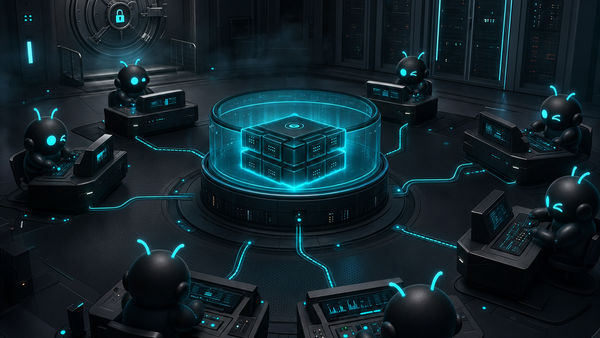
An Agentic OS is the operating layer that lets multiple AI agents work together with tools, files, browser sessions, memory, approvals, logs, and safe boundaries. It is what turns a pile of agents into a usable AI agent army. ClawBud is a managed Agentic OS that runs OpenClaw, Hermes, Codex, Claude Code, and other agents on a private cloud computer instead of shared containers.
Table of contents
- The short answer
- Why normal chatbots are not enough
- What an Agentic OS actually manages
- Why private cloud matters
- How OpenClaw and Hermes fit in
- Signs you need an Agentic OS
- FAQ
The short answer
An Agentic OS is not another chatbot UI. It is the workspace, control plane, permission layer, and operations surface for AI agents that do real work.
One agent can live in a chat window. A whole agent army cannot.
Once you run OpenClaw for operations, Hermes for workflow, Codex or Claude Code for engineering, a browser agent for research, and a CRM agent for follow-up, you stop having an AI problem. You have an operations problem.
Where do files live?
Who owns a task?
Which agent can touch Gmail?
What happens when auth expires?
Where are the logs when something breaks at 2am?
That is the job of an Agentic OS.
Why normal chatbots are not enough
Chatbots are fine for answers. Agents are different because they act.
They open browsers, run commands, edit files, call APIs, schedule tasks, send messages, create CRM notes, and sometimes make mistakes with a lot of confidence. That last part is not a bug in the pitch deck. It is the part you design around.
A chatbot needs a prompt box.
An agent needs:
- a filesystem
- a browser
- tool permissions
- model credentials
- memory
- logs
- approvals
- task history
- integration state
- a safe place to fail
The moment you add a second agent, you also need coordination. The moment you add a customer workflow, you need auditability. The moment you connect email, payments, CRM, or WhatsApp, you need boundaries.
This is where a blank VPS becomes annoying. It gives you power, but it also gives you chores.
What an Agentic OS actually manages
A serious Agentic OS should manage the boring parts that make agents useful every day.
1. Agent runtime
The runtime keeps agents alive and reachable. It handles long-running sessions, background work, scheduled jobs, tool calls, and channel connections.
For ClawBud, this means agents like OpenClaw and Hermes do not live as random experiments on a laptop. They run on a dedicated cloud computer with persistent state.
2. Tools and integrations
Agents need tools. But tools without structure become chaos.
A good Agentic OS should make it easy to connect:
- Gmail
- Telegram
- Google Calendar
- Google Drive
- GitHub
- Stripe
- Notion
- CRM systems
- MCP servers
- browser automation
The important part is not the logo wall. Everyone has a logo wall now. The important part is whether the agent can use the integration reliably, with the right permission boundary, and with enough logs to debug what happened.
3. Shared work surfaces
Humans need to see what the agent army is doing.
That means dashboards like:
- Agent Orchestra for active missions
- Business Room for shared business work
- CRM for contacts, deals, notes, and follow-ups
- logs and approvals for risky actions
- browser surfaces for web tasks
Text chat alone hides too much. If an agent is working on a lead, a proposal, or a codebase, the user should not have to guess what is going on.
4. Permissions and boundaries
This is where the product gets serious.
An agent that can read a public website is low risk. An agent that can send WhatsApp messages, edit a repo, access customer files, or call payment APIs is a different animal.
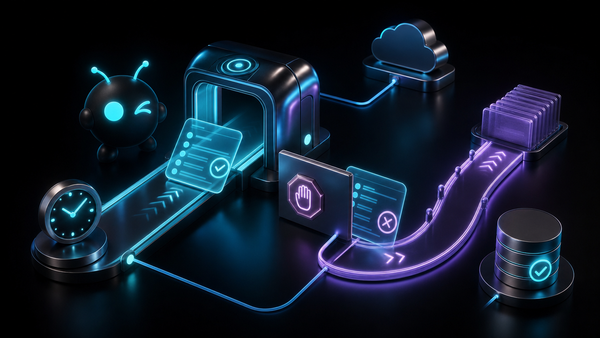
An Agentic OS needs per-agent boundaries:
- which tools the agent can use
- which files it can touch
- which accounts it can access
- which actions need approval
- which channels it can message
- how to revoke access quickly
This is why ClawBud talks about a per-agent firewall. It is not decorative security language. It is the difference between a toy demo and something a business can trust.
5. Memory and state
Agents need memory, but memory has to be useful.
Bad memory is a junk drawer. Good memory is operational context:
- customer preferences
- previous decisions
- project constraints
- open tasks
- integration status
- known failure patterns
- approved language and brand rules
The Agentic OS should make memory persistent without turning every conversation into a haunted attic.
Why private cloud matters
Shared SaaS is convenient. It is also the wrong default for many agent workflows.
AI agents touch things that are messy and personal: browser sessions, files, credentials, local state, customer messages, business documents, terminal commands. Running all of that in a shared container model can work for simple tasks, but it gets uncomfortable fast.
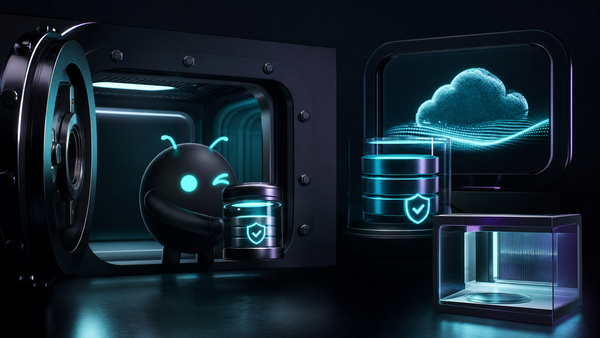
A private cloud computer gives each customer a dedicated environment for their agent army.
That matters because:
- browser sessions persist cleanly
- files and logs stay in one place
- tools can be installed locally
- agents can run longer tasks
- customer data is not mixed into shared runtime assumptions
- isolation is easier to reason about
This is the middle ground ClawBud is built around: not a naked VPS where the user has to install everything alone, and not a shared chatbot SaaS where the agent has no real home.
How OpenClaw and Hermes fit in
OpenClaw and Hermes are not the same thing.
OpenClaw is the broad agent runtime. It is strong when you want a persistent AI worker with tools, channels, browser control, cron jobs, files, and system access.
Hermes is more workflow-shaped. It fits the world of tasks, boards, handoffs, and agentic process.
Codex and Claude Code sit closer to coding workflows.
In a real business, you probably do not want one tool to pretend it is everything. You want the right agents in the same operating environment.
That is the Agentic OS view:
- OpenClaw handles broad operator work
- Hermes handles structured agent workflows
- Codex handles OpenAI coding flows
- Claude Code handles Anthropic coding flows
- browser agents handle web tasks
- CRM and Business Room connect the work to business outcomes
The product is not the agent list. The product is making the list usable.
Signs you need an Agentic OS
You probably need an Agentic OS if any of these feel familiar:
- You have more than one AI agent doing real work.
- Agents need browser sessions that persist.
- You connect customer channels like WhatsApp, Telegram, or email.
- You need approvals before agents send messages or change files.
- You want coding agents and business agents in the same environment.
- You need logs when something breaks.
- You want a private AI agent server without becoming a full-time sysadmin.
- You care about boundaries between agents.
If none of that matters, a chatbot may be enough.
If all of that matters, you are not shopping for a chatbot anymore.
You are looking for an operating layer.
Where ClawBud fits
ClawBud is a managed Agentic OS for your AI agent army.
It gives you a private cloud computer with a ready-to-run agent stack: OpenClaw, Hermes, Codex, Claude Code, Nemo Claw, Automaton, DeerFlow, integrations, skills, MCP, browser access, CRM, Business Room, orchestration, and per-agent firewall boundaries.
The point is not to make you assemble an agent army from scratch.
The point is to give the army a home.
FAQ
Is an Agentic OS the same as an AI agent platform?
Not exactly. An AI agent platform can mean almost anything, including a chatbot builder. An Agentic OS is specifically the operating layer around many agents: tools, state, memory, approvals, browser, logs, files, integrations, and coordination.
Is OpenClaw an Agentic OS?
OpenClaw is a powerful agent runtime. ClawBud uses OpenClaw as part of a broader managed Agentic OS that also includes Hermes, coding agents, browser tools, CRM, Business Room, integrations, and private cloud infrastructure.
Why does an AI agent need a private server?
It does not always need one. But once agents use browser sessions, files, tools, credentials, customer channels, and long-running work, a private server becomes much cleaner than shared containers or a laptop setup.
What is the difference between Hermes and OpenClaw?
OpenClaw is broader as an operator runtime. Hermes is more workflow-oriented. In ClawBud, they can live together as part of the same agent army instead of forcing you to choose one forever.
What is an AI agent army?
An AI agent army is a coordinated set of specialized agents. One might handle research, another coding, another CRM follow-up, another browser tasks, and another operations. The hard part is not creating agents. The hard part is managing them safely.