Private OpenClaw Agent Server: Why Dedicated Beats Shared Containers
If your company wants an OpenClaw agent that can touch real work, choose a private OpenClaw agent server over shared containers. Dedicated hosting gives you cleaner isolation, a dedicated firewall, predictable performance, safer credential handling, and a simpler path to compliance. ClawBud packages that model as managed OpenClaw hosting: one private AI agent server per customer, with setup, monitoring, and operational hardening handled for you.
TLDR
A shared container can be fine for demos, experiments, or low-risk personal automations.
A dedicated server is the better default when your OpenClaw agent connects to customer conversations, internal files, CRM data, GitHub, browser sessions, payment-adjacent workflows, or production systems.
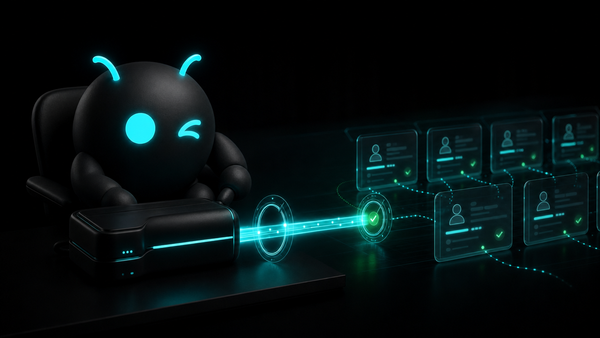
ClawBud gives each customer a private server for their enterprise OpenClaw agent. That means the agent, gateway, secrets, browser profile, logs, and connected channels run in a dedicated environment instead of sharing a crowded multi-tenant container host.
Table of contents
- What is a private OpenClaw agent server?
- Why shared containers feel cheaper at first
- Why dedicated beats shared for serious OpenClaw hosting
- Concrete architecture: how a dedicated OpenClaw server works
- The security angle: isolation is not a feature, it is the foundation
- When shared is still acceptable
- Buyer checklist for managed OpenClaw
- FAQs
- Meta, schema, and linking recommendations
What is a private OpenClaw agent server?
A private OpenClaw agent server is a dedicated server or VM that runs one customer’s OpenClaw gateway, agent sessions, connected channels, browser automation profile, tool configuration, logs, and secrets.
OpenClaw itself is a self-hosted gateway for AI agents. It connects chat surfaces like Telegram, WhatsApp, Slack, Discord, iMessage, and web chat to an AI agent that can use tools, memory, sessions, and routing. The key point is that OpenClaw is designed to run under your control, not only as a hosted black box.
A private server takes that idea seriously.
Instead of placing many customers inside one shared application environment, each customer gets a dedicated runtime boundary. Their agent does not share process space, local files, browser profiles, logs, or firewall rules with other customers.
For businesses, this matters because an AI agent is not just another SaaS widget. It may read leads, answer customers, inspect dashboards, write documents, send messages, operate a browser, call APIs, and trigger internal workflows. Once an agent can act, the hosting model becomes part of your security model.
Why shared containers feel cheaper at first
Shared containers are popular because they look efficient.
A provider can run many customer agents on the same host, use the same orchestration layer, reuse network paths, and centralize logs. That can reduce infrastructure cost and make onboarding feel fast.
For lightweight use cases, that can work:
- Personal experiments
- Short demos
- Disposable test agents
- Non-sensitive public data workflows
- Internal pilots with no real credentials
But shared containers often hide the risk until the agent becomes useful.
The moment you connect real channels, real files, real browser sessions, and real API keys, the tradeoff changes. The important question is no longer “Can the container start quickly?” It becomes “What happens if one tenant is compromised, misconfigured, noisy, or overusing resources?”
That is where dedicated OpenClaw hosting wins.
Why dedicated beats shared for serious OpenClaw hosting
1. Better tenant isolation
Container isolation is useful, but it is still usually layered on top of shared infrastructure. The host, orchestrator, logging systems, metadata paths, network layer, and operational tooling may still be common.
A private AI agent server gives each customer a stronger boundary. The customer’s gateway, config, tokens, browser state, message history, and logs live in their own environment.
For an enterprise OpenClaw agent, this is the sane baseline.
2. Dedicated firewall rules
A dedicated firewall AI agent can have rules that match the customer’s actual risk profile.
That means you can restrict inbound traffic, expose only the required ports, control admin access, and separate customer-specific network policy from everyone else’s.
In a shared container setup, network rules tend to become generic. Generic is convenient for the platform. It is rarely ideal for a customer that cares about security.
3. Cleaner secrets management
OpenClaw agents often need secrets:
- Model provider API keys
- Messaging channel tokens
- Browser session cookies
- CRM API keys
- Google, Notion, GitHub, or Slack credentials
- Webhook signing secrets
On a private server, secrets can be scoped to that customer’s filesystem, process environment, service account, and backup policy.
That reduces the blast radius. If one customer has a problem, it should not become everyone’s problem.
4. Predictable performance
Shared containers are vulnerable to noisy neighbors.
One tenant runs a heavy browser automation job, another triggers a long tool chain, another fills logs, and suddenly your customer support agent feels slow. With AI agents, latency is not just annoying. It can break the trust users have in the system.
A private OpenClaw agent server gives you more predictable CPU, memory, disk, and browser behavior. You can size the server for the actual workload instead of hoping the shared cluster has spare capacity.
5. Easier debugging
When an agent fails, you need clean evidence.
Dedicated hosting makes the investigation path simpler:
- Check the customer’s gateway health
- Inspect that customer’s service status
- Review that customer’s logs
- Validate that customer’s channel connection
- Confirm that customer’s model and tool config
There is less ambiguity. You are not trying to separate one customer’s issue from a swarm of unrelated tenant noise.
6. Better compliance story
A dedicated server does not magically make you compliant. Anyone saying that is selling fairy dust.
But it does make the compliance conversation cleaner.
You can explain where the customer’s runtime lives, how access is controlled, how logs are scoped, how backups are handled, and how credentials are separated. For many teams, especially agencies, finance-adjacent companies, healthcare-adjacent teams, and B2B operators, that clarity matters.
Concrete architecture: how a dedicated OpenClaw server works
Here is the practical model ClawBud is built around.
Customer layer
Each customer gets a private server that runs their OpenClaw environment.
That server usually includes:
- OpenClaw gateway as a managed service
- Customer-specific OpenClaw config
- Agent profiles and routing rules
- Channel connections such as Telegram, WhatsApp, Slack, or web chat
- Browser automation support when needed
- Local logs scoped to that customer
- Health checks and monitoring
- TLS through a customer-specific domain or subdomain
Network layer
The server is protected with a dedicated firewall policy.
A good setup keeps the exposed surface small:
- Public health endpoint where appropriate
- HTTPS endpoint for the gateway or control UI where needed
- Restricted admin access
- No broad internal network exposure
- Clear separation between customer environments
This is the difference between “the agent runs somewhere” and “the agent has an operational security boundary.”
Control layer
Managed OpenClaw hosting should include lifecycle operations:
- Provisioning
- Updates
- Gateway status checks
- Log inspection
- Channel pairing support
- Backup strategy
- Recovery path
- Alerting for failed services or broken integrations
This is where ClawBud differs from a plain VPS. The server is not the product. The managed agent environment is the product.
Agent layer
The enterprise OpenClaw agent sits on top of the gateway and uses tools based on business needs.
Common examples:
- Answering customer messages
- Drafting replies in Telegram or WhatsApp
- Checking internal dashboards
- Updating Notion or CRM records
- Reading files from approved sources
- Opening browser sessions for workflows that have no clean API
- Routing tasks between specialized agents
The more capable the agent becomes, the more important the hosting boundary becomes.
The security angle: isolation is not a feature, it is the foundation
Most AI agent security conversations focus on prompts, permissions, and model choice. Those matter. But they are not enough.
An agent that can act needs secure infrastructure around it.
A private OpenClaw agent server helps with four practical security goals.
Reduce blast radius
If one customer’s credentials, channel, or browser session has an issue, the incident should stay inside that customer’s environment.
Dedicated hosting gives you a stronger containment model than a shared runtime.
Keep logs scoped
Agent logs can contain sensitive operational context. Even when secrets are redacted, logs may reveal workflows, customers, internal names, URLs, or support issues.
Private servers make log scoping cleaner. One customer’s logs are not mixed with another customer’s logs in the same runtime path.
Control admin access
With dedicated infrastructure, access can be granted, audited, and revoked per customer environment.
That is much harder to reason about when many tenants share the same operational surface.
Match network rules to the customer
Some customers need stricter rules than others. A legal office, an enterprise sales team, and a hobby builder should not all be forced into the same firewall policy.
A dedicated firewall AI agent lets the hosting model match the risk model.
When shared is still acceptable
Dedicated is better for serious workloads, but shared containers are not evil.
Shared can be acceptable when:
- The agent has no sensitive credentials
- The use case is a demo or prototype
- The workflow does not touch customer data
- Downtime is not expensive
- The agent cannot perform external actions
- You are testing OpenClaw before committing
The mistake is not using shared infrastructure. The mistake is pretending it is the same thing as a private production agent server.
It is not.
Buyer checklist for managed OpenClaw
If you are evaluating managed OpenClaw providers, ask these questions before you connect real business systems.
Isolation
- Do we get a private server or a shared container?
- Are browser profiles separated per customer?
- Are logs stored per customer environment?
- Are channel sessions isolated?
- Can one tenant’s workload affect another tenant’s performance?
Firewall and network
- Does each customer get dedicated firewall rules?
- Which ports are exposed publicly?
- Is admin access restricted?
- Is TLS configured per customer endpoint?
- Can network policy be tightened for higher-risk customers?
Secrets
- Where are API keys stored?
- Who can access them?
- Are secrets scoped to one customer environment?
- Are backups encrypted or otherwise protected?
- Is there a clear credential rotation process?
Operations
- Who handles OpenClaw updates?
- Who monitors gateway health?
- What happens when WhatsApp, Telegram, or another channel disconnects?
- How are logs inspected during support?
- Is there a recovery plan if the server fails?
Commercial fit
- Is pricing based on real operational responsibility or just raw compute?
- Does the provider understand OpenClaw specifically?
- Can they support browser automation, channels, and agent workflows together?
- Do they provide onboarding, not just a server login?
If a provider cannot answer these clearly, do not connect production systems yet.
Why ClawBud uses dedicated OpenClaw hosting
ClawBud is built for businesses that want an AI agent they can actually use, not a toy sitting in a dashboard.
That means the agent may handle real conversations, workflows, data, and decisions. For that, the safest default is a private server per customer.
ClawBud’s approach is simple:
- One customer, one private OpenClaw environment
- Managed setup instead of DIY server work
- Dedicated firewall instead of generic shared rules
- OpenClaw hosting built for live business channels
- A path from simple chat assistant to enterprise OpenClaw agent
This model costs more to operate than cramming everyone into shared containers. Good. The cheap shortcut is exactly where trust gets expensive later.
For companies that care about control, separation, and reliability, dedicated infrastructure is not overkill. It is the adult version of AI agent hosting.
FAQs
What is a private OpenClaw agent server?
A private OpenClaw agent server is a dedicated environment that runs one customer’s OpenClaw gateway, agent configuration, channels, logs, browser state, and secrets. It gives the customer stronger isolation than a shared container.
Is managed OpenClaw better than self-hosting?
Managed OpenClaw is better if you want OpenClaw’s control without maintaining servers yourself. Self-hosting is fine for technical teams with time to manage updates, logs, security, channels, and recovery. ClawBud is for teams that want the private setup handled for them.
What is OpenClaw hosting?
OpenClaw hosting is infrastructure and operational support for running the OpenClaw gateway and agent environment. Good OpenClaw hosting should include setup, monitoring, security boundaries, channel support, and recovery planning.
Why not just use a shared container?
Shared containers can be cheaper and faster for demos. For production agents, they introduce weaker isolation, noisier performance, generic network rules, and a messier security story. Dedicated hosting is safer for real business workflows.
What is a dedicated firewall AI agent?
A dedicated firewall AI agent is an AI agent environment protected by customer-specific firewall rules. Instead of using generic shared network policy, the agent’s server can expose only what that customer needs.
Does a private server make an AI agent fully secure?
No. Security also depends on permissions, prompts, tools, credential handling, human review, monitoring, and recovery. A private server is not the whole answer, but it is a much better foundation than shared runtime hosting.
Who should use ClawBud?
ClawBud fits businesses that want a private AI agent server without becoming OpenClaw infrastructure experts. It is especially relevant for agencies, service businesses, operations teams, and companies that need connected AI agents with stronger isolation.
Conclusion
A private OpenClaw agent server is the right default for companies that want their agent to do real work. Shared containers are fine for experiments, but production agents need better isolation, dedicated firewall rules, cleaner logs, safer secrets, and predictable operations.
ClawBud turns that into managed OpenClaw hosting: one private AI agent server per customer, built for business use from day one.
If your agent will touch customer conversations, internal systems, or sensitive workflows, do not start with the cheapest container. Start with the hosting model you will still trust six months from now.